


Introduction
A smooth, even driveway not only enhances your home’s curb appeal but also ensures safety for vehicles and pedestrians. However, over time, many homeowners notice an unsettling issue — a sinking driveway. Depressions or uneven sections can develop, making your driveway look aged, unstable, and unsafe.
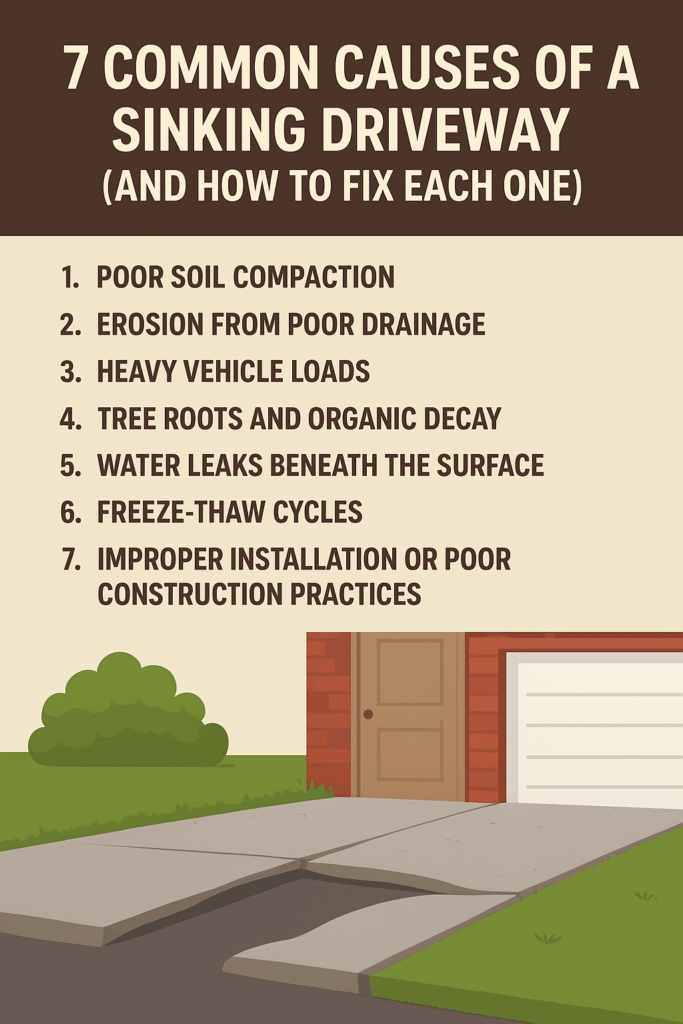
Understanding why your driveway is sinking is the first step toward fixing it effectively. From soil erosion to poor installation, there are several possible culprits. In this blog, we’ll explore the 7 most common causes of a sinking driveway and practical ways to fix each one — before the damage gets worse.
1. Poor Soil Compaction
One of the leading causes of a sinking driveway is improper soil compaction during installation. When the ground beneath the driveway isn’t compacted tightly enough, it eventually settles under the weight of vehicles and natural ground movement. This results in sunken or uneven areas that worsen over time.
How to Fix It:
- For minor sinking, polyurethane foam injection (polyjacking) or mudjacking can lift the concrete back to its original position.
- For severe settlement, sections may need to be removed, the base soil compacted correctly, and new concrete poured.
Prevention Tip: Always ensure your contractor compacts the soil thoroughly before installation — this small step can prevent major future repairs.
2. Erosion from Poor Drainage
Water is concrete’s worst enemy when not properly managed. Poor drainage around the driveway causes rainwater to wash away the supporting soil underneath. Over time, this leads to hollow spaces, cracks, and sunken sections.
How to Fix It:
- Improve drainage: Install French drains, gutters, or swales to divert water away.
- Seal cracks: Prevent further water infiltration by sealing cracks with high-quality concrete filler.
- If erosion has created voids beneath the slab, mudjacking or foam injection can fill them and stabilize the structure.
Prevention Tip: Routinely check that your downspouts and drainage systems are directing water away from your driveway.
3. Heavy Vehicle Loads
Driveways are designed to support typical residential vehicle weights, but parking heavy trucks, RVs, or construction equipment can stress the surface and foundation. This pressure compacts the soil unevenly and causes sinking or cracking.
How to Fix It:
- For localized sinking, resurfacing or concrete lifting can help.
- For long-term durability, consider reinforced concrete or thicker slabs designed for heavier loads.
Prevention Tip: Avoid parking extremely heavy vehicles on the driveway for extended periods. If necessary, strengthen your driveway with thicker pavement or reinforced materials.
4. Tree Roots and Organic Decay
While trees add beauty to your property, their roots can wreak havoc beneath your driveway. Roots can either lift sections of concrete or create voids as they decay after being removed, leading to sinking or cracking.
How to Fix It:
- If tree roots are pushing the slab upward, a professional may cut or redirect the roots.
- For voids left by decaying roots, foam injection or grout filling can restore stability.
- In severe cases, replacing affected slabs might be necessary.
Prevention Tip: When planting new trees, maintain at least 10–15 feet of distance from the driveway to prevent root intrusion.
5. Water Leaks Beneath the Surface
Underground leaks from sprinkler systems, water lines, or sewage pipes can saturate the soil, weakening its load-bearing capacity. Over time, the soil erodes or shifts, causing driveway sinking in affected areas.
How to Fix It:
- Identify and repair any leaks or broken pipes immediately.
- Once the leak is fixed, stabilize the soil with injection lifting to restore levelness.
Prevention Tip: Regularly inspect your irrigation and plumbing systems for leaks, especially near or under concrete surfaces.
6. Freeze-Thaw Cycles
In regions with cold winters, the freeze-thaw cycle can cause significant driveway damage. When water seeps into cracks, it freezes and expands, pushing the concrete upward. Once it thaws, the soil underneath settles unevenly, creating dips or low spots.
How to Fix It:
- Use concrete leveling techniques like polyjacking to lift the surface.
- Seal cracks annually to prevent water infiltration.
- In extreme cases, replacing damaged slabs may be required.
Prevention Tip: Apply a concrete sealant every few years to protect against moisture penetration and freezing damage.
7. Improper Installation or Poor Construction Practices
Sometimes, the root cause of a sinking driveway lies in poor workmanship during installation. Using low-quality materials, insufficient reinforcement, or neglecting to allow proper curing can all lead to early failure.
How to Fix It:
- Have a professional inspect the structure to determine the extent of the issue.
- If multiple sections are affected, replacement might be more cost-effective than patching.
- For future installations, hire licensed and experienced concrete contractors who follow proper site preparation and curing practices.
Prevention Tip: Always verify the contractor’s credentials and ask about their process for base preparation, reinforcement, and drainage planning.
Bonus: When to Repair vs. Replace
Not every sinking driveway requires a full replacement. In many cases, concrete leveling or lifting offers a faster, cost-effective, and eco-friendly solution.
| Situation | Recommended Solution |
|---|---|
| Minor sinking (less than 2 inches) | Polyjacking or Mudjacking |
| Localized cracking | Crack filling or resurfacing |
| Extensive structural damage | Complete replacement |
| Ongoing drainage or erosion | Regrade area and improve water flow |
Consulting a professional concrete repair contractor is the best way to determine which option suits your situation and budget.
Conclusion
A sinking driveway is more than just an eyesore — it’s a sign that something deeper (literally) is wrong beneath the surface. Ignoring the problem can lead to further cracking, tripping hazards, and expensive repairs down the line.
By identifying the underlying cause — whether it’s poor soil compaction, drainage issues, or heavy loads — and taking corrective action, you can restore your driveway’s level, safety, and appearance.
If you notice dips or uneven surfaces forming, don’t wait. Contact a professional concrete repair or leveling specialist to assess the issue and recommend the best fix. A properly repaired driveway doesn’t just improve functionality — it adds lasting value to your home.
